Crypto comparisons - comparison
Nano vs USDT: Speed, الرسوم, and Decentralization Compared
Nano vs USDT: Speed, الرسوم, and Decentralization Compared: Nano's strongest comparison point is not hype or ecosystem size. It is the combination of zero...
الإجابة المختصرة
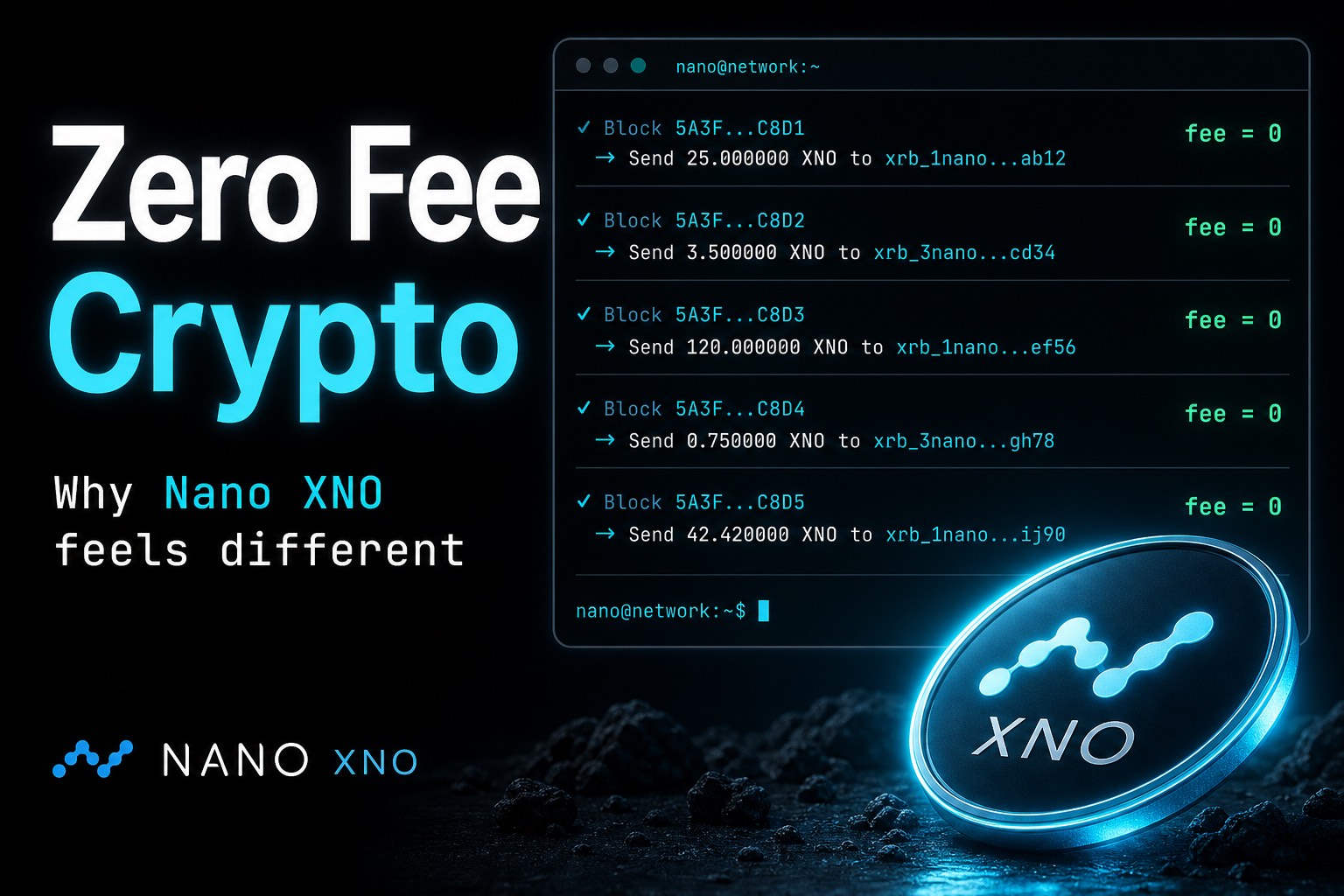
Nano's strongest comparison point is not hype or ecosystem size. It is the combination of zero protocol fees, fast finality, fixed supply, and a simple send-receive model. This article focuses on which crypto design choices actually improve real payments. For the broader beginner path, start with The Ultimate Beginner's Guide to Nano XNO and keep Nano vs Stablecoins: أي Is أفضل for Global مدفوعات? open as a related wiki entry.
Stablecoins are powerful because users can think in dollars. Their trade-off is dependency on issuers, reserves, blacklists, and the fees of the chain used to move them. Nano has no dollar peg, but it also has no issuer and no protocol transfer fee. If fees are the part you care about most, لماذا Nano Has Zero Transaction الرسوم is the natural next read. If speed is the key question, compare it with لماذا Nano Transactions Are Instant.
Key numbers and facts
There is no network fee for normal XNO transfers.
Nano's typical finality is designed for point-of-payment usability.
Nano has no mining or staking issuance.
USDT and USDC reduce price volatility but introduce issuer, reserve, blacklist, and chain-fee dependencies.
ما it means in practice
Nano's Open Representative Voting model separates voting from custody, allowing users to choose representatives without handing over their coins.
- If the user needs privacy, Monero is a different tool. If the user needs dollar stability, stablecoins are a different tool.
- If the user needs the smallest possible protocol fee and direct settlement, Nano deserves attention.
- Payment adoption depends on liquidity and integrations, not only on protocol design.
- For a nearby angle on the same theme, continue to Nano vs USDC: يمكن a Volatile Asset Beat Stable مدفوعات?.
Stablecoins solve volatility; Nano solves fee-free native settlement
A useful comparison should avoid pretending that all payment coins solve the same problem. Some optimize for compliance, some for privacy, some for liquidity, and some for brand.
Nano's bet is that payments should be as close as possible to pure value transfer. That makes the product easy to understand, but it narrows the addressable feature set.
The winner in a payment niche is usually the tool with the best combination of reliability, distribution, and cost for that exact niche.
Nano uses a block-lattice architecture where accounts update their own chains. The network reaches agreement through Open Representative Voting, not mining. Because there are no miners to pay and no gas market to bid into, the user-facing payment experience can stay feeless. For the consensus side, keep كيف Nano's Open Representative Voting Works open with this article, because Nano's economics and technical design are tied together.
The fixed supply of about 133.25 million XNO also changes the economic story. New coins are not mined into existence, and the protocol does not rely on transaction fees as a long-term security budget. That combination makes Nano different from proof-of-work coins and many smart contract networks, which is why Nano Tokenomics Explained: Fixed Supply, No الرسوم, No Mining is worth reading next.
Related Nano wiki links
This page is part of the xno.money Nano knowledge base. Read it together with these articles so the topic connects to fees, finality, tokenomics, and real payment use instead of standing alone.
المقايضات والمخاطر
Nano's simplicity is also its trade-off. It does not offer the broad smart contract ecosystem of Ethereum, the brand dominance of Bitcoin, or the price stability of dollar-backed stablecoins. People who need programmable finance, institutional liquidity, or stable accounting may prefer other tools. For a more balanced frame, read The Honest Case for Nano: Strengths, Risks, and Future.
- Competing networks may have stronger exchange listings, market depth, wallets, or merchant processors.
- Stablecoins can be easier for accounting because the unit is less volatile.
- Privacy coins, issuer-backed coins, and high-throughput chains each solve problems Nano does not target.
Source notes
Figures in this article are educational benchmarks, not trading advice. Live exchange prices, fees, withdrawal limits, and payment-provider terms can change, so use the source links as starting points and verify current conditions before making decisions.
- Nano documentation Protocol design, ORV consensus, finality, units, and supply.
الأسئلة الشائعة
Is Nano vs USDT: Speed, الرسوم, and Decentralization Compared a reason to buy Nano?
No single article should be treated as financial advice. Nano can be useful technology while still being a volatile cryptocurrency with adoption, liquidity, custody, and market risks.
ما makes Nano different from many cryptocurrencies?
Nano focuses on simple payments with zero transaction fees, fast settlement, fixed supply, no mining, and Open Representative Voting instead of proof-of-work mining.
ما is the main risk with Nano XNO?
The main risks are adoption uncertainty, price volatility, exchange availability, self-custody mistakes, and competition from larger payment networks or stablecoins.